Bone density in menopause: is walking enough?
Nov 03, 2026“I walk every day. Surely that’s doing my bones some good?”
It’s a fair question. And one I’ve had to think about myself.
If you’re concerned about bone density in menopause, you’ve probably seen plenty of advice about walking, lifting weights and doing impact exercise. But working out what you actually need—and how to fit it into your week—is another matter.
I love walking. It’s helped me through some difficult times, it gets me away from my laptop, and where I live in Kent, there’s usually a hill involved somewhere.
For a long time, I assumed my walking and running meant I had the bone-health side of things pretty well covered.
I now understand that I was expecting them to do rather a lot.
Walking is valuable for our health. But looking after our muscles and bones usually means including some strength work and, where appropriate, additional impact too.
Let me explain, starting with why I’m certainly keeping my walks.
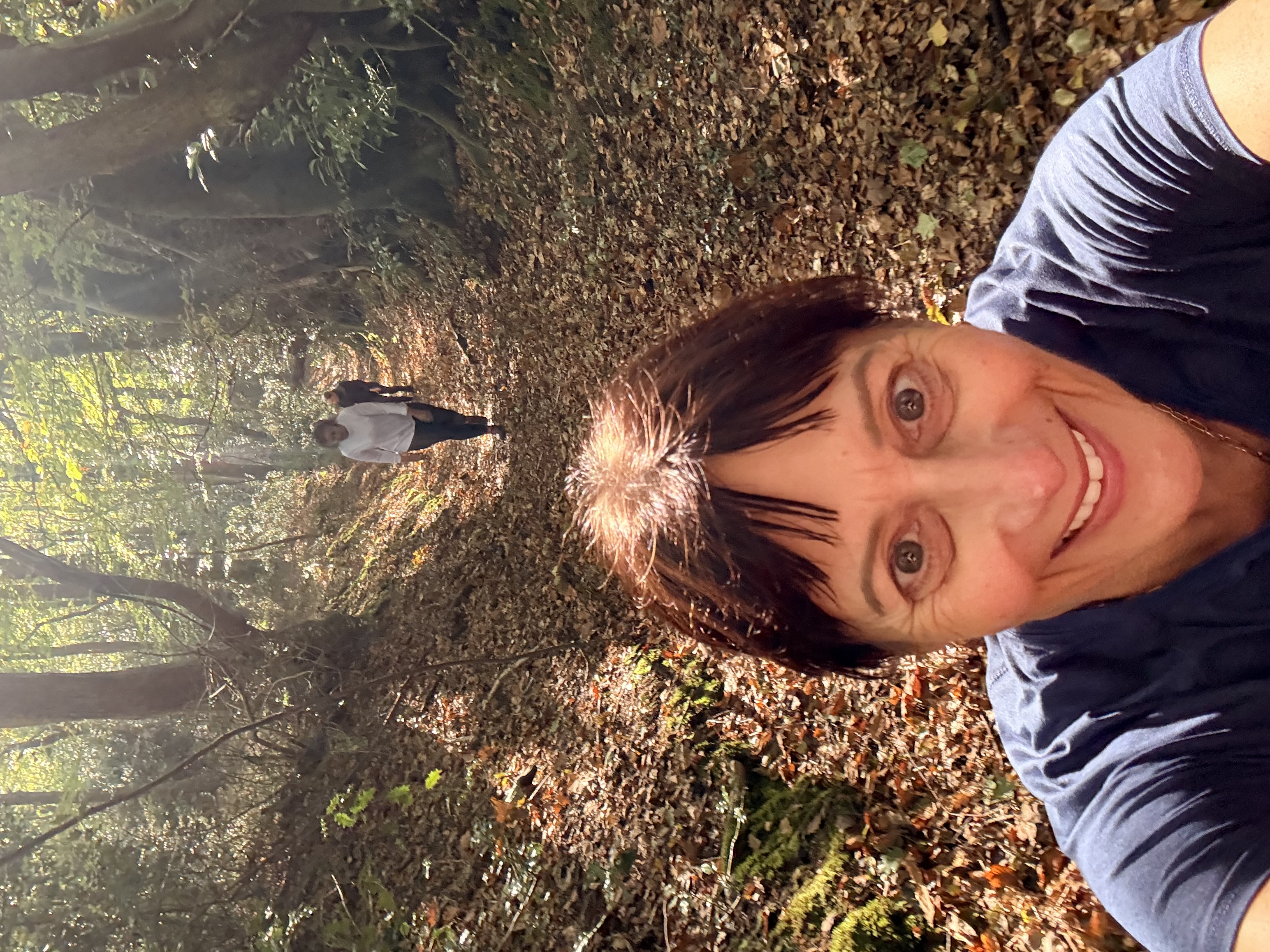
Sometimes a walk is about having an hour to yourself
During three years of caring for my parents in their own home, finding an hour or so to get outside, whenever I could, became really important for my mental health.
I’d choose a route I enjoyed, put on my Audible book and disappear into somebody else’s story for a while.
The appointments, phone calls and things to organise were still there when I got back. But for that little bit of time, I had some breathing space.
If you’re caring for elderly parents or relatives, you’ll probably understand. Even when you aren’t with them, there’s often a list running through your head.
Have they eaten? What happened with that prescription? Who’s taking them to their appointment?
Walking helped me put some of that down for a while.
Sometimes I walk on the roads around the block. Other times I head into the beautiful parkland near where I live in Kent.
I’m lucky to have that choice. But a walk doesn’t have to involve lovely views and a countryside footpath to count. Sometimes a loop from your front door is what fits into the day.
Getting out before the emails take over
I like to get outside in the earlier part of the day when I can. Daylight helps give our body its daytime signal, which is particularly useful when we spend a lot of time indoors.
But knowing that and actually getting out are two different things.
I teach my morning class from 8 until 8.30, then head into the kitchen for breakfast. I’m thinking about getting my 30 grams of protein, making a cup of tea and deciding what needs doing.
Then I think, “I’ll just answer a few emails.”
You can probably guess the rest.
Suddenly it’s lunchtime. I’m still at the laptop, and I haven’t been out.
Once I get sucked into emails, it’s surprisingly difficult to drag myself away. There’s always one more thing I could finish first.
So now I put a placeholder in my diary. That time is blocked out, which means nobody can book one of my free discovery calls while I’m supposed to be walking.
It gives the walk a proper place in the day, rather than leaving it until everything else is finished.
Because when does that ever happen?
And if you miss the morning, please don’t decide you’ve missed your chance. Before midday is my useful personal target, not a deadline after which walking stops being worthwhile.
Walking the dog has changed a bit too
My cockapoo, Elma, is 12 and a half.
In her younger days, we’d happily be out for an hour, sometimes an hour and a quarter. She was young and sprightly, and taking her for a walk meant I got a proper walk too.
These days, if there’s even a hint of rain or dampness in the air, persuading her out of the door is a job in itself.
I still love our walks. But they don’t give me the same amount of exercise they used to.
Sometimes I need to take her round the block, bring her home and then head out again for my own walk.

Elma. Much happier indoors when it’s raining.
That takes a bit of determination, doesn’t it? You’re already indoors. The dog is settled. The kettle is looking tempting.
So if you’ve got an older dog too, I understand. You may have done the dog walk, but still need a walk for you.
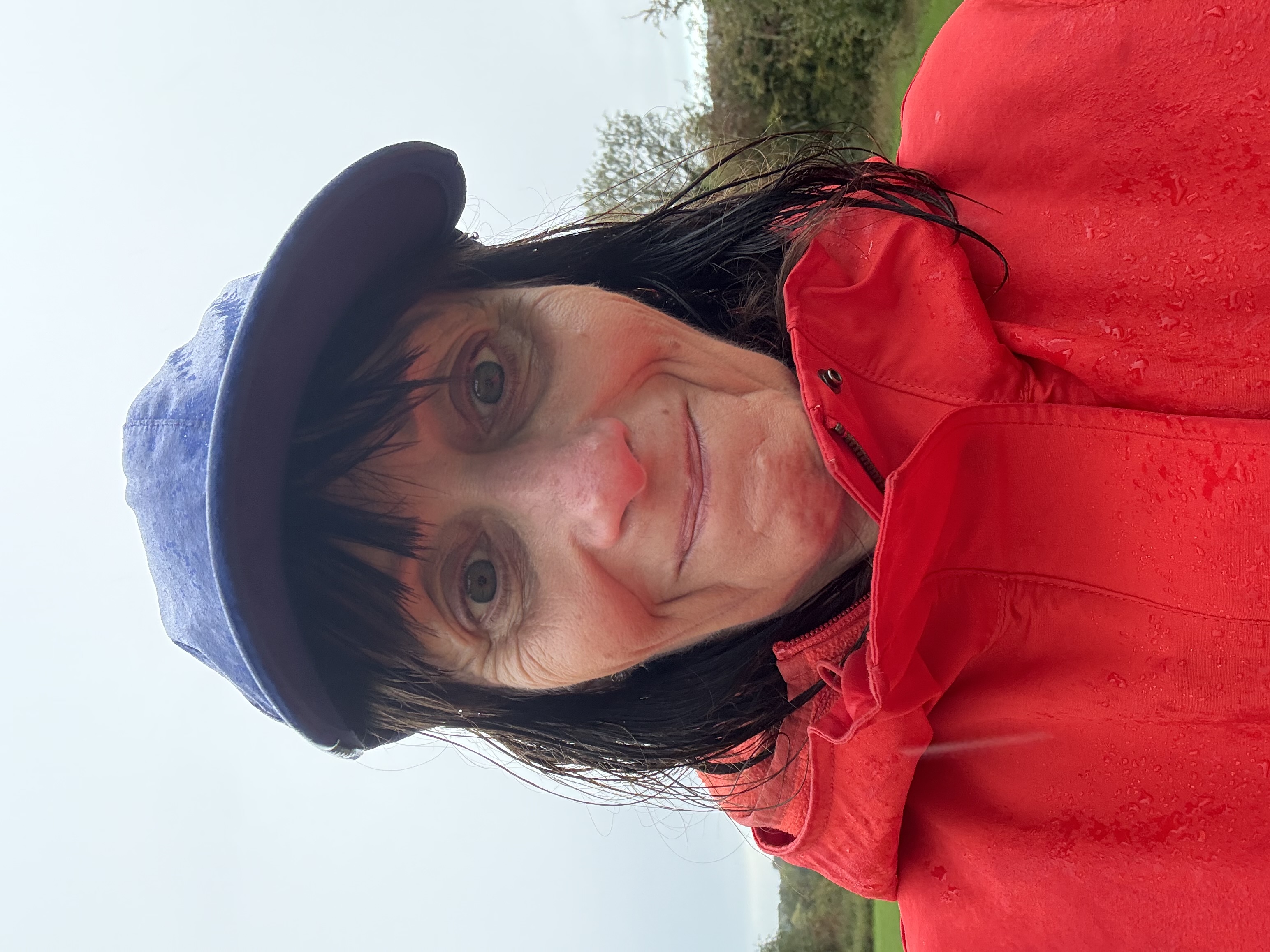
Not every walk comes with blue skies!
And yes, the weather can make it harder
It’s all very well talking about the benefits of walking when the sun is shining.
It’s less appealing when it’s cold, wet, windy and getting dark.
Half the battle can be having clothes you’re comfortable going out in: a waterproof coat, enough layers and footwear that keeps you comfortable and gives you a decent grip.
You don’t need a whole new expensive wardrobe. You can sometimes find good second-hand outdoor clothing on Vinted and similar sites. Just check the condition, particularly waterproofs and the soles of walking shoes.
If you’re walking near roads in the dark, think about visibility and a well-lit route too.
Having your kit ready removes one more reason to put it off. And when conditions feel unsafe, change the plan.
What walking does for your health
Apart from the breathing space, walking can do useful work for your heart and fitness.
Where I live, there isn’t much that’s flat. Some of those hills certainly make themselves known.
A brisk walk can help build stamina and support heart health. A useful guide is that you can talk, but singing would be difficult. Shorter walks count too—you don’t need a spare hour every time.
But heart fitness, muscle strength and bone strength aren’t exactly the same thing.
An activity can be doing you plenty of good while still leaving room for something else.
Does walking strengthen bones after menopause?
Walking is a weight-bearing activity. Your legs support your bodyweight, and each footstep puts a load through your bones.
That is useful. Low-impact activities such as walking can help reduce the loss of bone strength. Suitable moderate-impact activities can provide a stronger stimulus for improving it.
So I wouldn’t say walking “does nothing” for your bones.
But walking alone is unlikely to provide all the muscle and bone-strengthening work you need, particularly throughout your whole body.
Your bones respond to the demands placed on them. Walking mainly loads the lower body; it doesn’t challenge your wrists, arms and shoulders in the way that appropriate resistance exercises can.
For bone health, the Royal Osteoporosis Society recommends combining strength exercise with suitable impact exercise, building up gradually.
Keep your walks. Then look at what could sit alongside them.
What about running? I thought I had this covered
I’ve been running for more than 25 years. Everything from 5Ks to marathons, with a fair amount of pleasure—and a few occasions when I’ve wondered why on earth I signed up.
I rather assumed that all that impact meant my bones were getting everything they needed.
Looking more closely at the evidence made me reconsider that assumption.
Running can benefit bones. Jogging is included among the moderate-impact activities recommended for bone strength, so it would be wrong to suggest it doesn’t count.
But running doesn’t replace strength training for the whole body.
My runs aren’t giving my arms, shoulders and back the same challenge as pushing, pulling and lifting against resistance.
So I’m keeping my running and making sure strength work has a regular place too.
What does adding impact actually mean?
Impact is the force created when your feet meet the ground.
Walking gives you a lower level. Activities such as jogging, dancing, small jumps and hopping can give you more.
That doesn’t mean everyone reading this needs to start hopping around the kitchen.
There are different starting points. Purposeful marching, stepping and stair climbing may suit one woman. Another may be ready for stamping or small jumps.
You also don’t have to progress to jumping off a step. Moderate impact can benefit bones; higher impact isn’t a necessary destination.
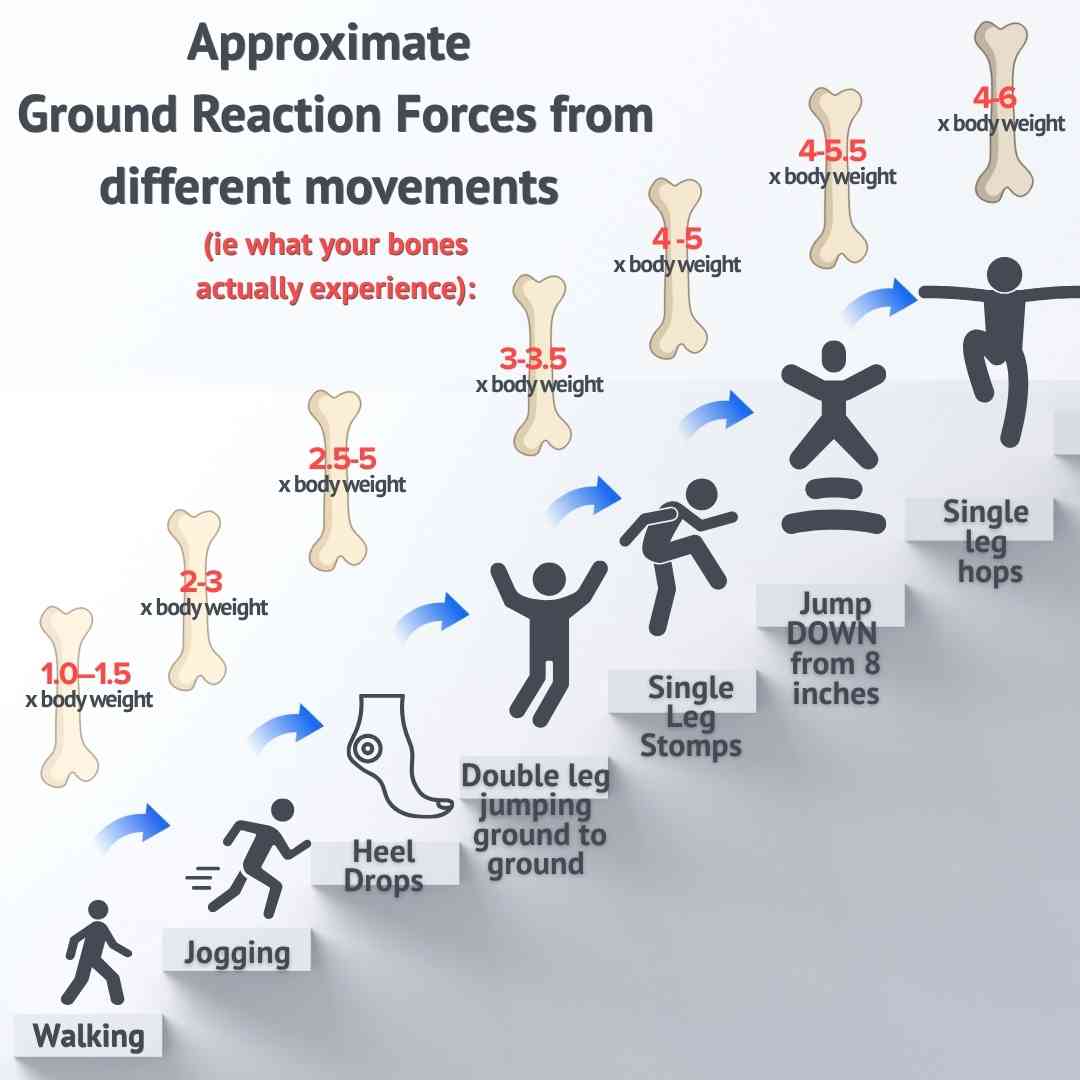
A note about this graphic: These figures are illustrative estimates. Forces vary with technique, speed, landing and the individual. Ground reaction force is not the same as the load at every bone, and these numbers do not establish a threshold for bone growth. This is not a progression everyone needs to follow.
The right level depends on your joints, balance, current activity and fracture history.
If you have osteoporosis, previous spinal fractures, several fractures from minor falls, or painful joints, get individual advice before increasing impact. Lower-impact activity, strength and balance work may be the appropriate focus.
There’s no benefit in forcing yourself through something unsuitable because you’ve heard it’s good for bones.
What if bone density is already a worry?
Perhaps osteoporosis runs in your family. Perhaps a scan has shown osteopenia, meaning your bone density is below the normal reference range.
Or perhaps you’re taking medication that can affect your bones.
Those are reasons to talk to your healthcare team about your individual risk and whether you need assessment, monitoring or treatment.
Exercise is an important part of looking after your bones, alongside nutrition and any treatment you need. It isn’t a guarantee against osteoporosis or fractures.
But you can still take practical steps, starting at a level that suits you.
Is walking enough to maintain muscle?
Walking uses your muscles, particularly on hills. But it doesn’t usually challenge all the major muscle groups enough to replace strength training.
Strength training means working against resistance. That could be your bodyweight, a band or dumbbells.
Getting up from a chair with control. Doing a wall press-up. Pulling a resistance band. Lifting and carrying a weight.
As your muscles work, they pull on the bones, providing another useful stimulus for bone strength.
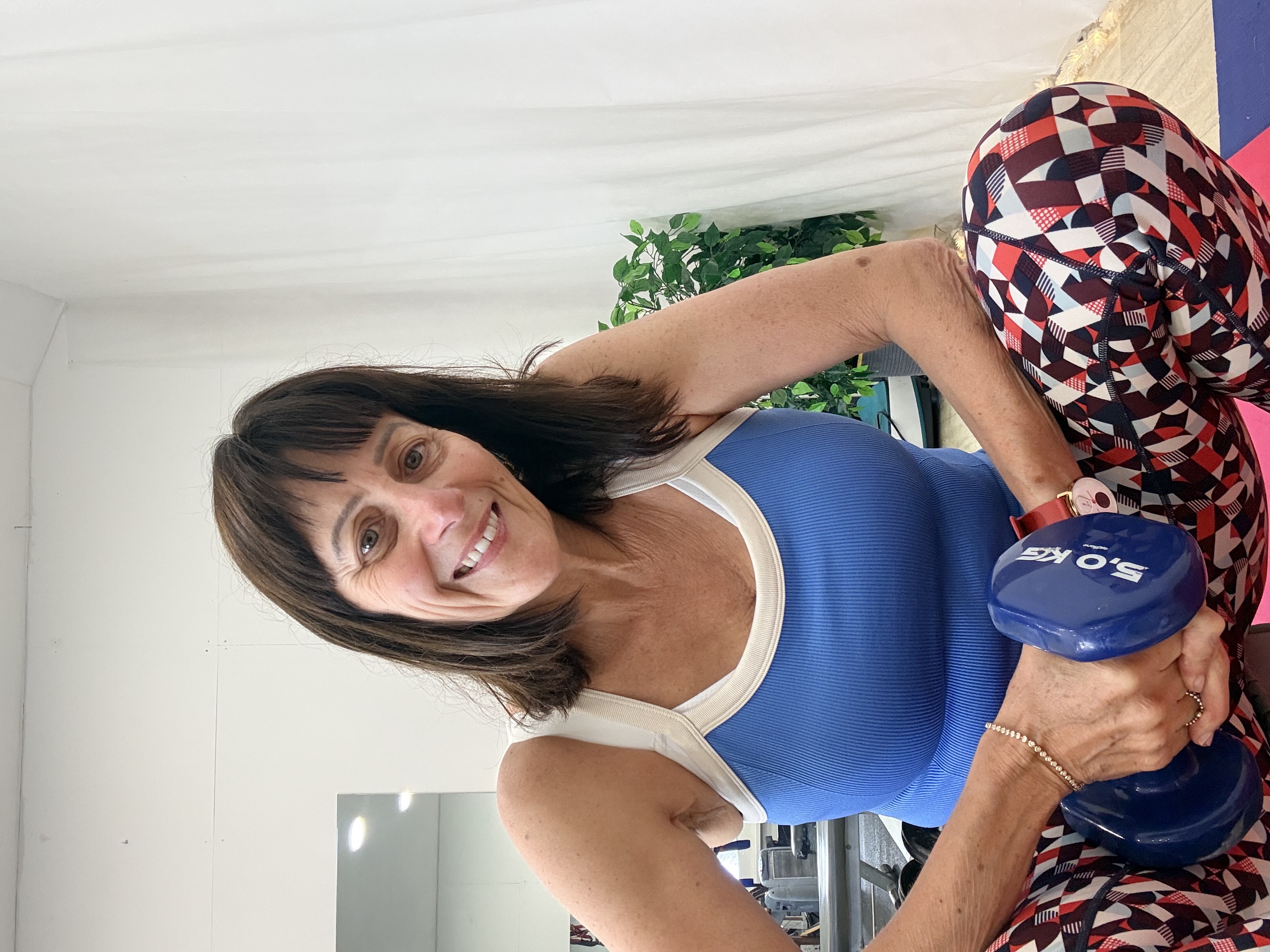
A little regular strength work has a place alongside my walks.
I think it helps to connect this with something you actually want to do.
Perhaps you want to feel stronger for a walking holiday. Enjoy your padel. Carry a suitcase. Lift your grandchild or get off the floor without needing the furniture.
Those are good reasons to make time for strength work.
How to start strength training after menopause
You don’t need to begin with the heaviest weight in the gym. You don’t even need to go to a gym.
Bodyweight or light weights may give you plenty to work with while you learn the movements.
But as you get stronger, the challenge needs to develop too.
That might mean a heavier weight, a stronger resistance band or a more demanding version of an exercise. Gradually increasing the demand is part of effective strength training.
You don’t have to match anyone else. Find a level that gives you useful work with good technique, then build from there.
If you’re currently doing none, one manageable session a week is a reasonable beginning. Aim to build towards at least two strength-focused sessions on separate days, covering the major muscle groups. Bone-health guidance commonly recommends two to three days a week.
Two well-planned 30-minute sessions can be a practical way to fit this into your week. What you do, how challenging it is and how you progress matter as well as the time spent.
That’s what we work on in the Midlife Movement Hub strength classes: regular practice, options for different starting points and guidance along the way.
You don’t need to arrive already strong. We start with what you can manage now.
What might be missing from your week?
I don’t want you to finish reading this feeling your walks have been a waste of time.
Mine have given me breathing space during caring, time away from emails, lovely outings with Elma and plenty of hills to puff up.
I’m keeping all of that.
I’m also making room for strength, balance and the impact that suits my body.
You might already be doing more than you realise. Gardening, dancing, carrying things and playing sport all contribute to the bigger picture.
The useful question is: what does my week already cover, and what could do with a little more attention?
Let’s find movement that fits your life
My free movement quiz can help you work out what might be missing.
Tell me about the movement you already do, what feels difficult and what you’d like to feel more confident doing. You’ll receive a personalised one-week movement plan by email, with practical suggestions for where to start.
You don’t have to change everything. Let’s find a manageable next step.